
Most listings in this market are legitimate, but the ones that aren’t tend to share a small set of warning signs. None of these alone is proof of a problem, but two or three together are a reason to look elsewhere or ask direct questions before you pay.
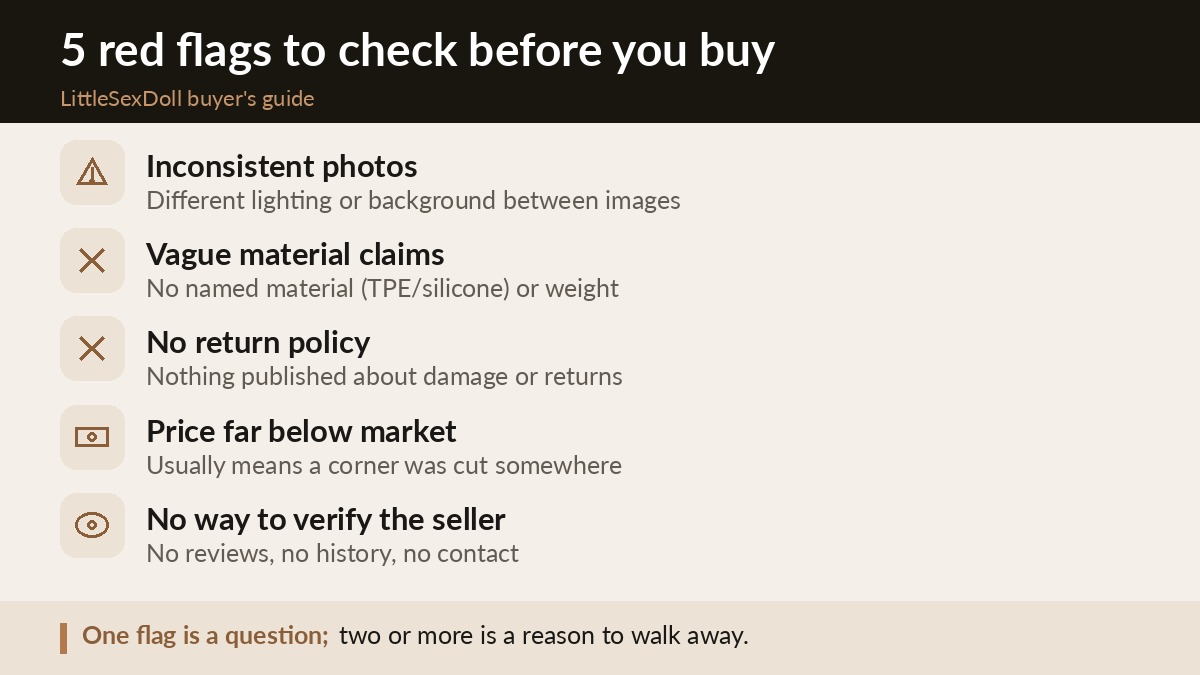
Photo inconsistencies
Watch for listing photos that don’t quite match each other — different lighting setups, different backgrounds, or a face sculpt that looks subtly different from photo to photo. This can mean stock images from a manufacturer’s catalog are being mixed with photos of a different, lower-grade product actually being shipped. Reverse-searching a suspicious photo takes a minute and can save a disappointing delivery.
Vague material and spec claims
A legitimate listing states the material (TPE or silicone), the skeleton type, and the weight, specifically. Listings that only say “premium material” or “lifelike skin” without naming which of the two standard materials it is, or that give a height with no corresponding weight figure, are missing information a real manufacturer’s spec sheet always includes.
No visible return or damage policy
Shipping damage happens occasionally even with careful packaging, and a seller with nothing published about returns, replacements, or damage claims is putting all the risk on you. Look for this before ordering, not after something arrives wrong.
A price that’s meaningfully below the market
Material and manufacturing cost puts a real floor under what a full-size doll can be sold for. A listing priced well under comparable options, for a size and material that should cost more, is usually cutting corners somewhere — lower-grade material, a weaker skeleton, or in the worst cases a listing that doesn’t ship the product shown at all. Comparing a few listings for the same size and material before you commit gives you a working sense of what “too good to be true” actually looks like in this category.
No way to verify the seller
A storefront with no reviews, no history, and no way to contact a real person before purchase is a harder bet than one with a track record. This doesn’t mean every new seller is a problem, but it does mean doing a little more homework — checking for independent mentions elsewhere, testing their response to a pre-sale question — before sending payment for a large purchase.
The short version
Specific material and weight, a clear return policy, consistent photos, a price that lines up with comparable listings, and a seller you can actually reach. Four or five out of five is a normal, safe listing. Missing two or more is worth pausing on.