
The sticker price on a doll listing is the biggest single number you’ll pay, but it isn’t the whole bill. Shipping, a proper storage solution, cleaning supplies, and the occasional repair all add up over a few years of ownership. None of it is a surprise if you plan for it upfront, and none of it should be either — sellers rarely spell out the full picture in one place.
The upfront costs
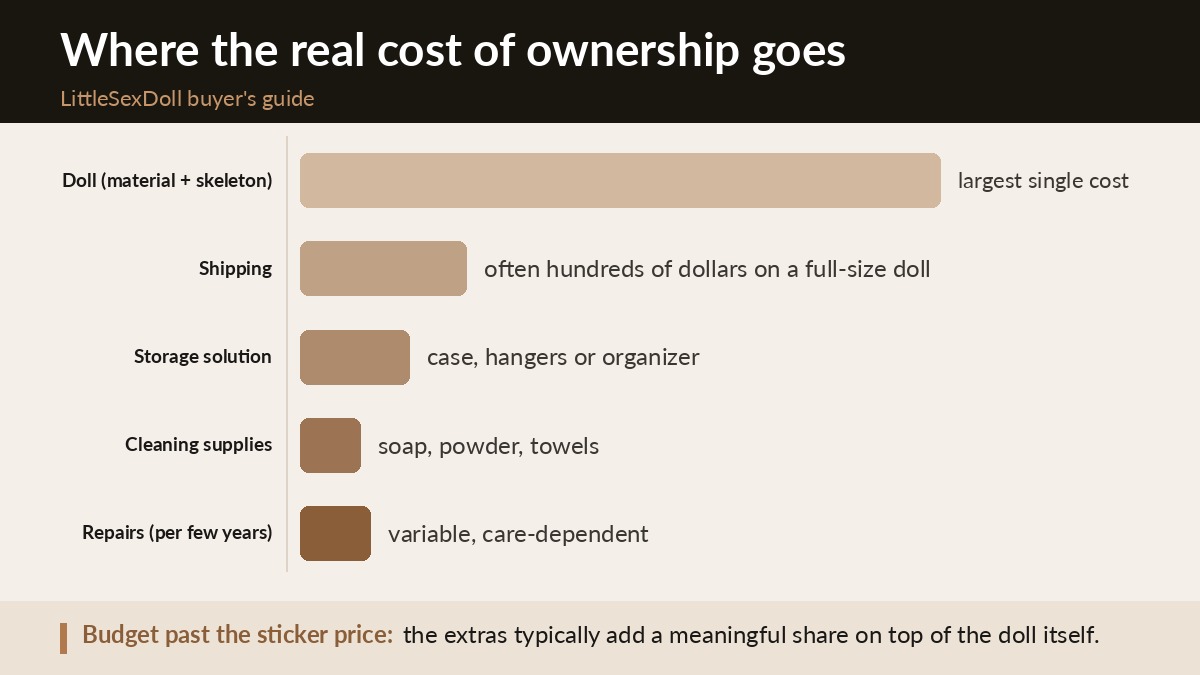
The doll itself is most of the bill, and where it lands depends on material and skeleton grade rather than anything cosmetic. Shipping is the next line, and it’s rarely trivial: a full-size doll is a heavy, oddly-shaped package, and international freight on one can run into the hundreds of dollars depending on the destination and how the seller handles customs. Read the shipping line on a listing before you fall for the headline price.
The setup costs people forget
- A real storage solution. A hanging system, a padded case, or a dedicated closet organizer. Leaving a doll in its shipping box long-term is the single most common way owners damage one, so budget for this at the same time as the doll, not after.
- Cleaning supplies. Mild unscented soap or a dedicated cleaner, renewal powder for TPE, lint-free towels, and a stain remover eventually. Individually cheap, but it’s an ongoing line, not a one-time purchase.
- A repair kit. Small TPE tears and loose joints happen eventually. A basic kit is inexpensive and worth having before you need it rather than after.
- Extra wigs or outfits. Optional, but the most common add-on purchase in the first year.
The ongoing cost over a few years
Once the setup is done, year-to-year cost is low. Powder and cleaner are the main recurring purchase, and both last a long time between refills. The variable you can’t fully predict is repair: a well-cared-for doll may never need more than the basic kit, while one stored poorly or handled roughly can need a part replaced within a couple of years. Care is the actual cost lever here, more than luck.
Where people overspend
The most common overspend isn’t the doll, it’s paying for skeleton or feature upgrades that don’t match how the doll will actually be used, then separately underspending on storage and ending up with the exact damage those upgrades were supposed to prevent. If the budget is tight, it’s almost always better to buy a simpler doll and a proper storage case than a fully-loaded one with nowhere good to keep it.