
Eyes are one of the few doll components most buyers actually notice up close, and the material behind them changes how the doll looks, how much it weighs, and how easy it is to update later. The two options on almost every spec sheet are glass and acrylic. Here’s what actually separates them.
What’s different about each material
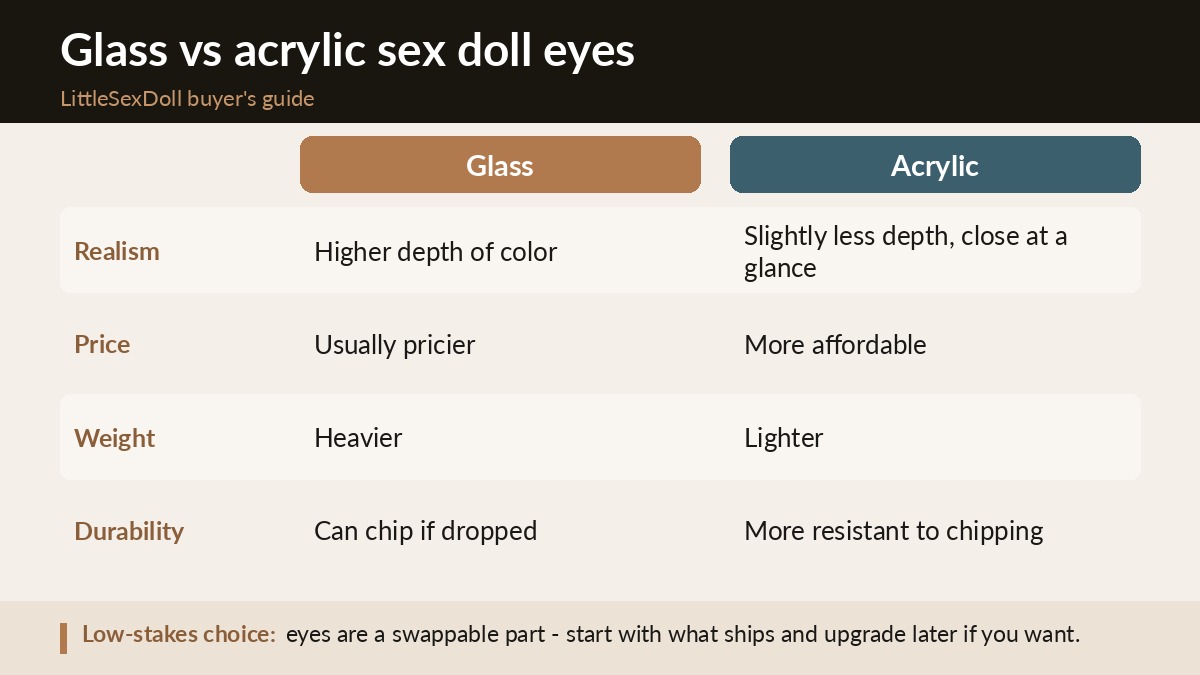
- Glass. Higher clarity and depth, which is why most sellers treat it as the “premium” option and price it a little higher. It’s also heavier and, being glass, can chip if dropped or handled roughly during a swap.
- Acrylic. Lighter, less expensive, and more resistant to chipping or cracking if it’s ever knocked around. The tradeoff is slightly less depth to the color, though at normal viewing distance most people can’t tell the difference in a photo.
How swapping actually works
Doll eyes sit in a socket behind the eyelid and are held in place with a small amount of tension rather than glue, which is what makes them replaceable at all. To swap a pair, you gently push from behind the eyelid until the old pair pops forward, then seat the new pair the same way. Most eyes are a standard size within a brand’s product line (commonly 14mm, 16mm, or 18mm), so it’s worth checking your doll’s original spec before ordering replacements — the wrong diameter simply won’t seat properly.
Care differences
Both materials just need an occasional wipe with a soft, dry or slightly damp cloth. Avoid alcohol-based cleaners on either type, since repeated use can cloud the surface over time. Glass holds up better against years of cleaning wipes; acrylic is more forgiving if the doll gets bumped or dropped during storage or transport.
Which one to pick
If you want the most realistic depth of color and don’t mind paying a little more or handling eye swaps carefully, glass is the better pick. If you’d rather have something lighter, cheaper, and more forgiving if it gets dropped during a wig change or storage move, acrylic is the practical choice. Neither one is a wrong answer — sellers offer both because both hold up fine in normal use, and the difference matters most if you plan to collect multiple eye colors and swap between them often, where acrylic’s lower cost and lower breakage risk add up.