
Eventually a doll reaches the end of its usable life, and getting rid of a large TPE or silicone item is genuinely more of a logistics problem than most people expect. It’s heavy, it’s not recyclable curbside, and a lot of municipal waste programs have rules about oversized items. Here’s how to handle it without a headache.
Why you can’t just put it in the regular trash
A full-size doll is a large, heavy, oddly-shaped item, the same category as a mattress or an armchair as far as most waste haulers are concerned. Standard curbside pickup in a lot of areas won’t take it, or will only take it as a scheduled bulk/oversized item, sometimes for an extra fee. Check your local sanitation department’s oversized-item rules before you plan to just set it out with the regular trash, since a lot of places will simply leave it if it doesn’t meet their pickup criteria.
The realistic options
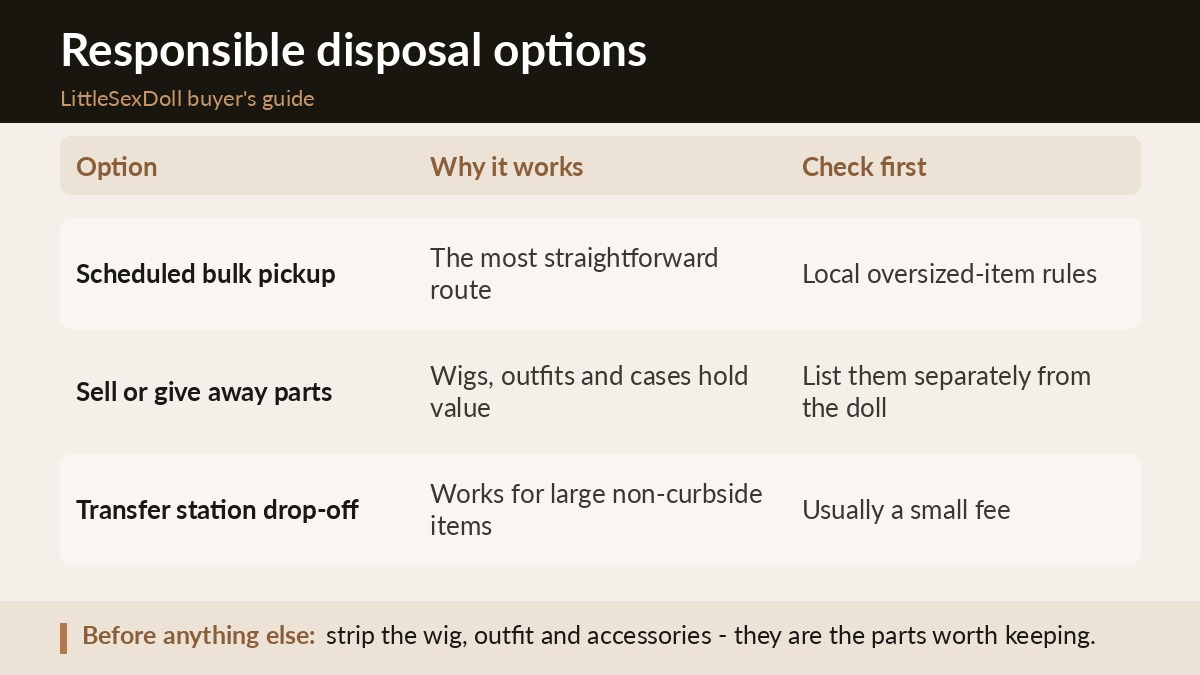
- Scheduled bulk waste pickup. The most straightforward route in most areas. Break it down as much as reasonably possible first (remove the wig, any clothing, and the storage case, which can usually go with regular waste or be reused) to make the pickup itself simpler.
- Sell or give away individual parts. Wigs, unused outfits, and storage cases hold resale value even after the doll itself is past its useful life, and can be listed or given away separately from the doll.
- A private drop-off at a waste transfer station. Many areas allow this for large items that don’t qualify for curbside pickup, usually for a small fee.
Privacy during disposal
The same packaging logic from ordering applies in reverse. Wrap the doll in plain, opaque material (the original shipping materials work well if you kept them) before it goes anywhere visible, whether that’s a curb, a shared trash area, or a transfer station drop-off. Breaking it down and bagging it in sections, rather than leaving it as one recognizable shape, is the simplest way to keep the process low-key.
Before you get to this point
A doll that’s been cared for properly, following the routine in our cleaning and storage guide, lasts years longer than one that’s been neglected, which pushes this whole question well down the road. When the time does come, planning the disposal the same way you’d plan for any large furniture item, checking local rules first, breaking it down, keeping it low-key, covers nearly every situation without drama.