
Most doll wigs are synthetic fiber, not human hair, and synthetic fiber has its own rules. Treat it like real hair and you’ll melt or frizz it within a few washes. Here’s what actually works.
Washing
Cool or lukewarm water only, with a shampoo made for synthetic fiber or a very mild, sulfate-free option. Swish gently, don’t scrub or twist the fibers against each other. Rinse thoroughly, then squeeze water out with a towel by pressing, the same rule as the doll’s skin: never wring.
Detangling
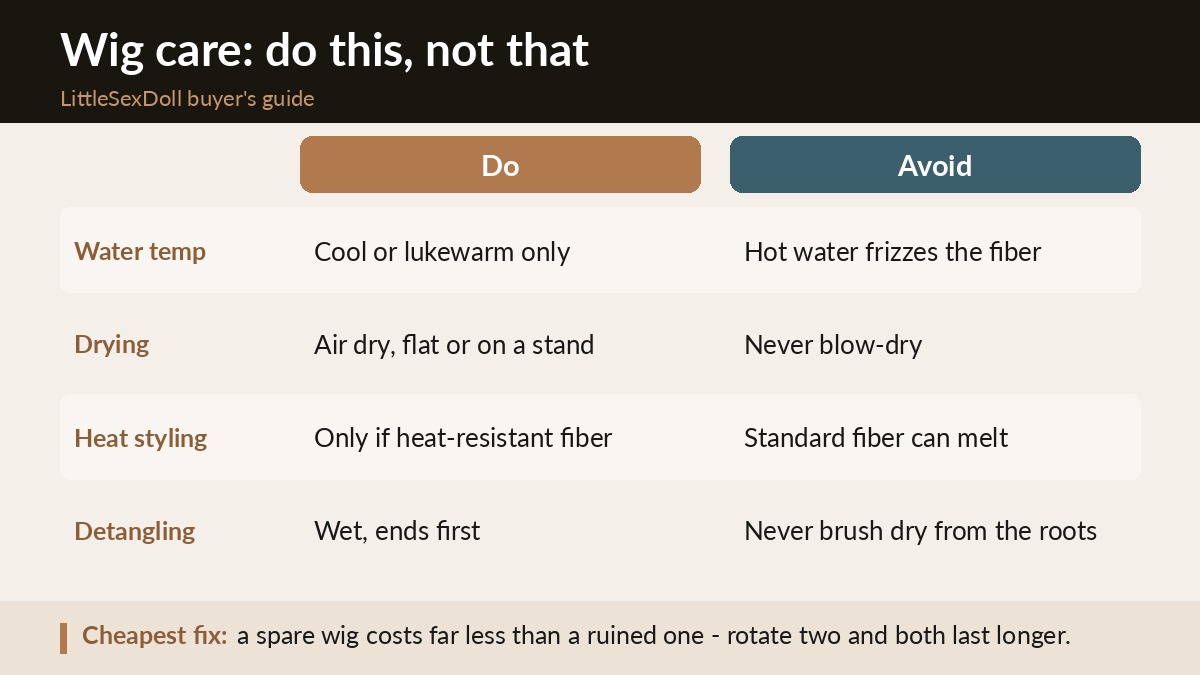
Always detangle wet, never dry, and always start at the ends before working up to the roots. A wide-tooth comb or a wig-specific brush is worth the small cost, a regular hairbrush is too aggressive on synthetic fiber and causes frizz that doesn’t come back out.
Heat is the fiber’s real enemy
- No standard flat irons or curling irons unless the wig is specifically labeled heat-resistant fiber, and even then keep the temperature low.
- Air dry only, laid flat on a towel or on a wig stand. A blow dryer’s heat will frizz or partially melt standard synthetic fiber.
- Keep it away from direct sun and heat vents during storage, for the same reason.
Storage between uses
A wig stand keeps the shape and airflow best. If you’re storing it flat instead, a loose braid or a low ponytail prevents the matting that comes from fibers shifting against each other in a bag over weeks. A silk or satin liner in a storage bag reduces friction further, the same idea as a silk pillowcase for real hair.
When to replace instead of restyle
Frizz from heat damage doesn’t reverse with washing, and a wig that’s matted badly enough to need cutting out knots has usually lost enough length that a replacement looks better than the fix. A fabric softener soak can revive mild dryness, but a heat-damaged wig is a wig to replace, not repair. Keeping a second wig on hand means you’re never stuck mid-wash with nothing to use.