
Torso and full-body dolls solve different problems, and the right choice depends more on your space and budget than on which one is “better.” Here’s how to think through the decision.
Weight and handling
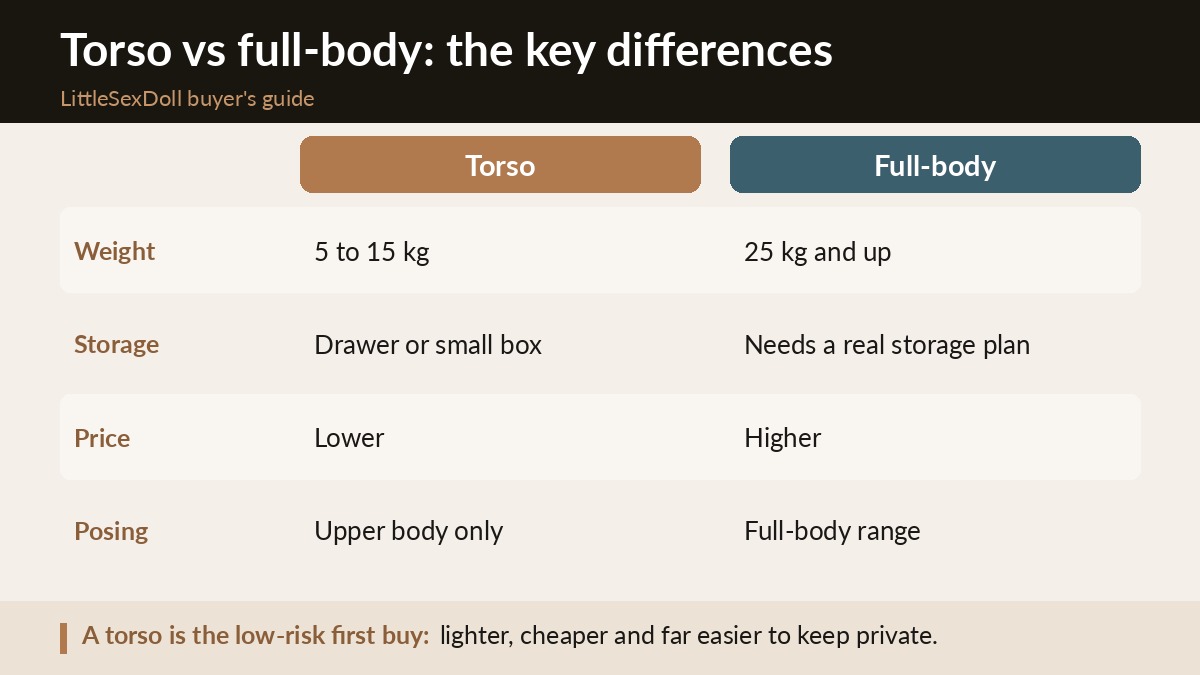
A torso typically weighs somewhere in the 5 to 15 kg range depending on material and size, light enough to move with one hand. A full-body doll starts around 25 kg at the shortest common heights and climbs well past 40 kg for taller silicone builds. That difference alone shapes almost everything else about ownership, from how you store it to whether you can move it alone.
Storage footprint
A torso fits in a drawer, a small storage box, or a closet shelf. A full-body doll needs a real plan: a hanging system, a dedicated case, or a corner of a closet it can lie flat in. If you’re in a small apartment, share a living space with roommates, or simply don’t have a spot for a suitcase-sized item, that’s an argument in favor of a torso all by itself.
Price and what you give up
Torsos cost meaningfully less, which makes them a lower-risk way to try a material or a brand before committing to a full-body purchase. What you give up is obvious but worth stating plainly: no legs, no full-body posing, and a smaller overall presence. Some torsos include a head, most don’t, so check that specifically if a face matters to you.
Who each one actually fits
- Torso makes sense if: you have limited storage space, want to test a material or brand affordably, or live somewhere privacy is a bigger constraint than it would be with a full-size item.
- Full-body makes sense if: you have a real storage plan already, want the complete posing range, and the price difference isn’t a deciding factor.
Bottom line
Think about where the item will actually live day to day before you think about anything else. If you can’t picture a storage spot for a full-body doll, that’s a real answer, not a small detail, and a torso is very likely the more practical starting point.