
Almost everyone shopping for a first doll gets stuck on the same question before they look at a single face or body: TPE or silicone? It is the one decision that follows you for the life of the doll. It sets the price, it sets how much cleaning you sign up for, and it changes how the doll feels in your hands. You cannot swap materials later, so it is worth getting right the first time.
Here is a plain comparison based on manufacturer specs and what long-term owners actually report.
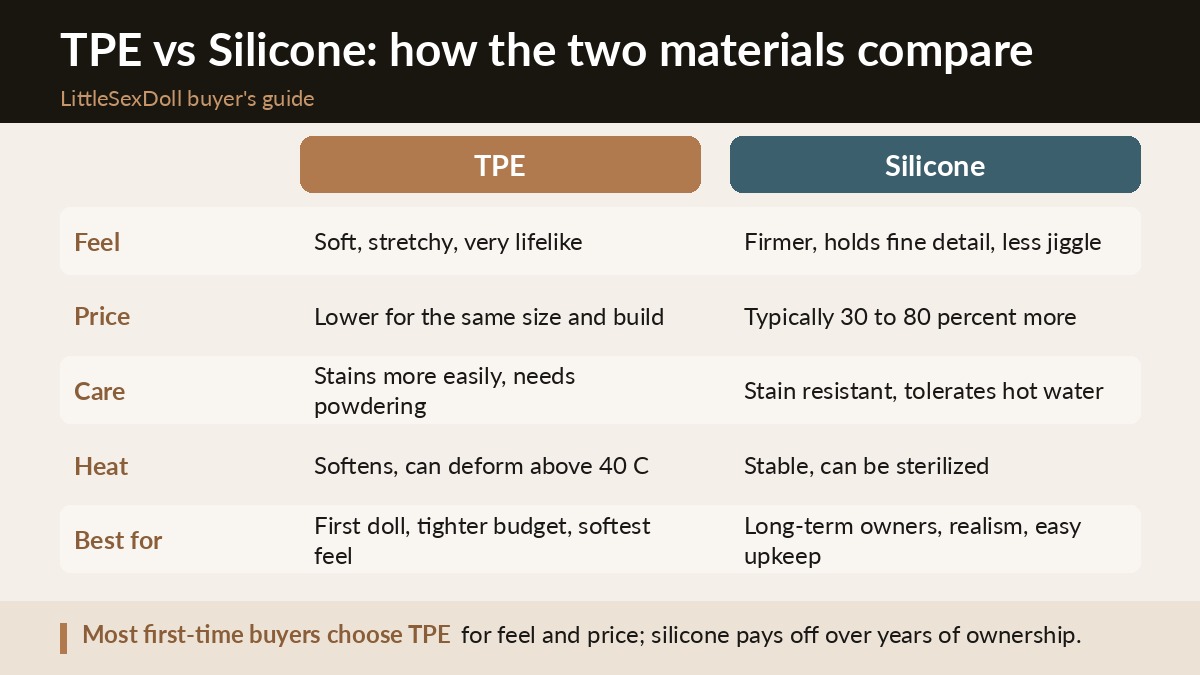
What the two materials actually are
TPE stands for thermoplastic elastomer. It is a soft, oil-based blend that behaves a lot like rubber. It stretches, it has a bit of bounce, and it warms up quickly against skin. Most dolls under a mid-range price point are TPE, and the material has carried the market for the last decade because it is cheap to mold and pleasant to touch.
Silicone, specifically platinum-cure silicone, is a denser and more chemically stable material. It holds a sculpted edge far better, which is why the most detailed faces and hands tend to be silicone. It costs more to produce and the raw material price is higher, so a silicone doll usually runs 30 to 80 percent above a TPE doll of the same size and build.
Feel
This is where TPE still wins for a lot of buyers. It is softer, it gives more, and the chest and rear have a natural jiggle that silicone does not quite match without engineered inserts. If your priority is the closest thing to soft skin, TPE gets you there for less money.
Silicone feels firmer and slightly more solid. Owners describe it as more “toned” than soft. The trade-off is realism in the details. Pore texture, subtle skin coloring, and fine facial features read better in silicone, especially in photos and in daylight.
Cleaning and upkeep
TPE is porous. It absorbs oils, it can pick up color from dark or dyed clothing, and it needs a light dusting of powder after it dries to keep the surface smooth. Leave a TPE doll in a red shirt for a week and you may have a pink tint to deal with. None of this is hard, but it is a routine you have to keep.
Silicone is close to non-porous. It resists stains, it tolerates hot water and proper sterilizing agents, and it does not need powdering. For an owner who wants the lowest maintenance over five or ten years, silicone is the easier material to live with.
Whichever you pick, the after-use routine matters more than the material. We wrote a separate walkthrough on how to clean, dry, and store a doll without damaging it.
Heat, sunlight, and durability
TPE softens as it warms and can deform if it sits against a heat source or in a hot car. It also degrades faster under direct sunlight. Store it out of a sunny window and keep it away from radiators.
Silicone is thermally stable. It can be warmed safely, it can be cleaned with hot water, and it holds up better to years of handling. A well-kept silicone doll simply lasts longer.
Smell
New TPE has a faint oily or plastic odor for the first week or two. It airs out. Silicone is close to odorless from the start. If a chemical smell bothers you, that is a small point in silicone’s favor.
So which one should you buy
- First doll, or a tighter budget: TPE. You get the softest feel and the most body for the money, and the upkeep is manageable once it is a habit. Browse the TPE collection.
- You want it to last a decade with minimal fuss: silicone. Higher upfront cost, lower effort over time, better detail. See the silicone collection.
- You care most about photorealistic faces: silicone, or a hybrid doll with a silicone head on a TPE body, which several brands now offer.
- You plan to move the doll around a lot: either material is fine, but weight matters more than material here. Read the size and weight guide before you commit.
There is no wrong answer between the two. TPE has sold the most dolls for good reasons, and silicone has won over owners who value low maintenance and fine detail. Decide what you will actually do week to week, and buy for that.